
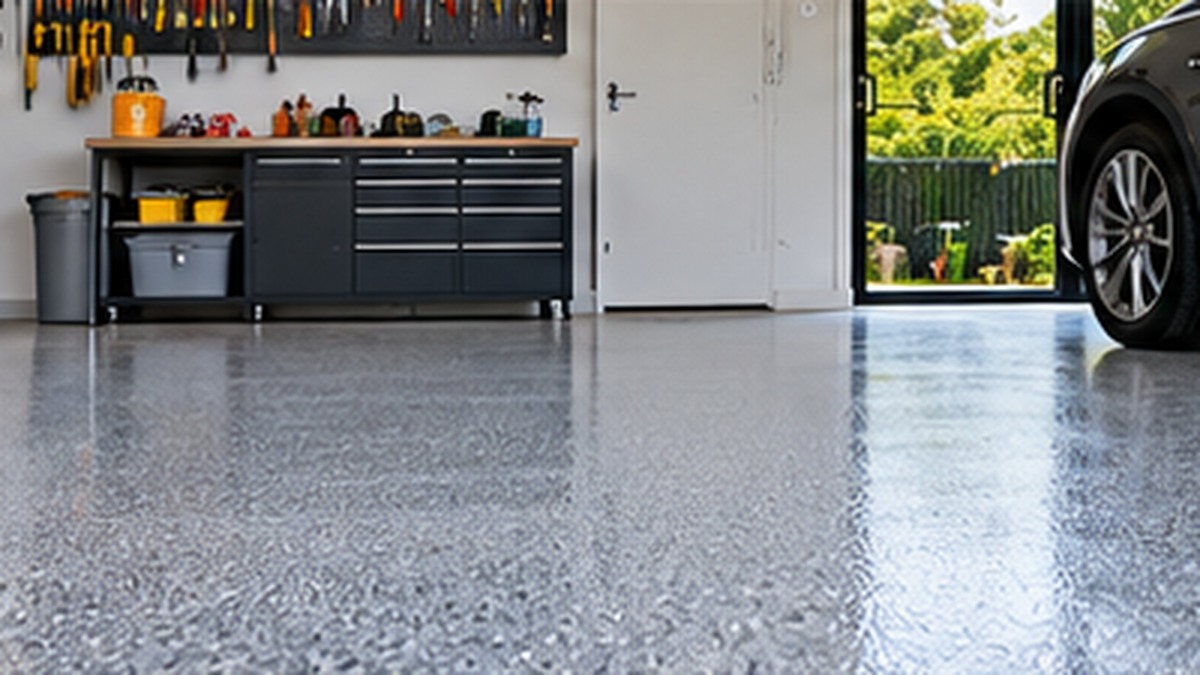
Good epoxy garage floor maintenance is simple: sweep or dust-mop often, wash the floor with a mild, pH-neutral cleaner and a soft mop, clean spills quickly, and protect the surface from sharp objects and heavy point loads. Avoid harsh acids, abrasive pads and strong solvents that can dull or damage the coating. This guide covers cleaning frequency, products, stain removal, damage prevention, common mistakes and the signs your floor needs repair or recoating.
Why Regular Epoxy Garage Floor Maintenance Matters
Regular epoxy garage floor maintenance keeps the surface looking good and helps the coating last. Grit and sand act like sandpaper under tyres and shoes, spills can stain if left too long, and small chips can spread if moisture gets underneath. A few minutes of care each week prevents most problems.
Epoxy coatings are known for being tough and easy to clean. They resist stains, chemicals and heavy foot traffic, which is why they are used in garages, workshops and commercial floors. But durable does not mean maintenance-free.
What regular care prevents:
- Dulling and fine scratches from grit dragged across the floor.
- Staining from oil, brake fluid, tyre marks and rust.
- Chips spreading when small damage is left unrepaired.
- Slippery surfaces from oil and grease build-up.
How to Clean Epoxy Garage Floors Properly
Clean an epoxy garage floor by first removing loose dirt, then washing with warm water and a mild, pH-neutral cleaner using a soft mop. Rinse with clean water and let the floor dry, or squeegee off excess water—clean spills as soon as possible rather than waiting for the next scheduled wash.
Step by step:
- Remove loose dirt: sweep with a soft broom or use a dust mop. Vacuuming works too.
- Mix a mild cleaner: warm water with a small amount of pH-neutral cleaner.
- Mop the floor: use a soft microfibre or foam mop.
- Scrub marks gently: use a soft-bristle brush or non-abrasive pad.
- Rinse: go over the floor with clean water to remove residue.
- Dry: squeegee standing water towards a drain or door, then let it air dry.
Maintenance schedule:
| Task | How often | Why |
| Sweep or dust-mop | Weekly, or more in busy garages | Removes grit that scratches the surface |
| Spot clean spills | As soon as they happen | Prevents staining |
| Damp mop with mild cleaner | Every 2 to 4 weeks | Removes grime and tyre marks |
| Deep clean with soft brush | Every few months | Lifts built-up dirt from textured finishes |
| Check for chips and wear | Every few months | Catches damage early |
| Inspect high-traffic areas | Once or twice a year | Shows where recoating may be needed |
Adjust the schedule for how you use the garage. A workshop or a garage with several cars will need cleaning more often than one used mainly for storage.
Best Cleaning Products and Tools for Epoxy Flooring
The best cleaning products for epoxy floors are mild, pH-neutral cleaners diluted in warm water. The best tools are soft brooms, dust mops, microfibre or foam mops, soft-bristle brushes and squeegees. Avoid acidic cleaners, citrus-based products, harsh solvents and abrasive pads, which can dull or damage the coating.
| Use | Avoid |
| Mild, pH-neutral cleaners | Acidic cleaners such as vinegar in strong solutions |
| Warm water | Citrus-based degreasers on the coating |
| Soft broom or dust mop | Stiff wire brushes |
| Microfibre or foam mop | Steel wool and abrasive scourers |
| Soft-bristled brush for marks | Harsh solvents unless the installer approves them |
| Squeegee to remove water | Soap-based cleaners that leave residue |
| Absorbent material for spills | Leaving spills to soak overnight |
Always check the cleaning instructions from your installer or coating manufacturer first. Different epoxy systems and topcoats can have different care requirements.
Safety with cleaning products. Ventilate the garage when using any cleaner, store chemicals away from children, and follow the product label.
How to Remove Oil, Grease and Stubborn Stains
Remove oil and grease by soaking up as much as possible with an absorbent material, then cleaning the area with a mild degreaser suitable for epoxy and a soft brush. Rinse well. For tyre marks and stubborn stains, use a soft-bristle brush with a mild cleaner and work gently rather than using harsh chemicals or abrasive pads.
| Stain | How to clean it |
| Oil and grease | Absorb with kitty litter or absorbent pads, then clean with a mild degreaser and soft brush |
| Tyre marks | Soft-bristled brush with mild cleaner; repeat rather than scrub hard |
| Brake or transmission fluid | Wipe up immediately; clean with mild cleaner |
| Rust marks | Clean early; ask your installer about a suitable product |
| Paint drips | Wipe while wet; ask your installer before using solvents on dried paint |
| Salt or mineral residue | Wash with warm water and mild cleaner |
Test any new product on a small, hidden area first. Clean spills quickly, as the longer they sit, the harder they are to remove.
Preventing Scratches, Chips and Surface Damage
Prevent damage by keeping grit off the floor, protecting it from sharp or heavy objects, and spreading heavy loads. Use mats at entry points, felt pads under furniture, plywood under jack stands and heavy equipment, and avoid dragging tools or metal items across the surface.
Protection tips:
- Entry mats: catch grit and water at doors.
- Felt or rubber pads: under shelving, benches and storage units.
- Plywood or rubber under jack stands, motorbike stands and heavy equipment: spreads point loads.
- Lift, do not drag: move toolboxes, bins, and heavy items by lifting or by moving on wheels.
- Drip trays: under cars that leak oil or fluids.
- Avoid dropping tools: sharp, heavy items can chip the coating.
- Sweep regularly: grit causes most fine scratches.
Remember that hot tyres, chemical spills and constant heavy loads in one spot are the main stresses on a garage floor.
Common Epoxy Garage Floor Maintenance Mistakes to Avoid
The most common mistakes are using the wrong cleaners, scrubbing with abrasive pads, leaving spills to sit, ignoring small chips and dragging heavy objects across the floor. Each one shortens the life of the coating or spoils its appearance.
| Mistake | Why it is a problem | What to do instead |
| Using acidic or citrus cleaners | Can dull or etch the finish | Use a mild, pH-neutral cleaner |
| Abrasive pads or steel wool | Scratches the surface | Use a soft brush or microfibre mop |
| Leaving oil or chemicals on the floor | Can stain the coating | Clean spills quickly |
| Soap-based cleaners | Leave a slippery film | Rinse well or use a residue-free cleaner |
| Ignoring chips | Moisture and dirt get under the coating | Arrange repairs early |
| Dragging heavy items | Gouges and chips | Lift or use wheels and pads |
| High-pressure washing up close | Can damage edges and chips | Use a low-pressure rinse or ask your installer |
| Never sweeping | Grit wears the surface | Sweep weekly |
Signs Your Epoxy Garage Floor Needs Repair or Recoating
Your epoxy garage floor needs repair or recoating when you see chips, peeling, bubbling, worn patches where the colour or concrete shows through, stains that will not clean, or a dull surface that cleaning does not restore. Small areas can often be repaired; widespread wear may need a recoat.
| Sign | What it may mean | Likely action |
| Small chips | Impact damage | Spot repair |
| Peeling or lifting | Coating losing adhesion, often moisture or preparation | Professional assessment |
| Bubbles or blisters | Moisture or trapped air under the coating | Professional assessment |
| Worn patches in tyre paths | Coating worn through in high-traffic areas | Repair or recoat |
| Persistent dullness | Surface wear | Recoat or topcoat |
| Stains that will not clean | Chemical damage to the surface | Repair or recoat |
| Cracks | Movement in the concrete slab | Assess the slab before recoating |
Peeling and lifting often indicate a problem with the original preparation or with moisture in the slab. A professional assessment helps determine whether a spot repair, a recoat, or a full replacement is needed.
For more on choosing a coating, read our guide to epoxy vs other garage floor coatings.
Maintenance checklist:
- [ ] Sweep or dust-mop weekly.
- [ ] Clean spills straight away.
- [ ] Damp mop with a mild, pH-neutral cleaner every few weeks.
- [ ] Use entry mats and drip trays.
- [ ] Put pads under shelving and heavy items.
- [ ] Use plywood under jack stands and heavy equipment.
- [ ] Avoid acidic cleaners, solvents and abrasive pads.
- [ ] Check for chips and wear every few months.
- [ ] Arrange repairs early.
Frequently Asked Questions
How often should you clean an epoxy garage floor?
Sweep or dust-mop weekly, clean up spills as soon as they happen, and damp-mop with a mild cleaner every two to four weeks. Busy garages and workshops may need more frequent cleaning.
What is the best cleaner for epoxy garage floors?
A mild, pH-neutral cleaner diluted in warm water is usually best. Avoid acidic and citrus-based cleaners, harsh solvents and soap-based products that leave residue. Check your installer’s care instructions first.
Can you pressure wash an epoxy garage floor?
A low-pressure rinse is generally safer than high-pressure washing, which can damage edges and lift coating around existing chips. Most epoxy floors clean well with a mop and mild cleaner. Check with your installer before using a pressure washer.
How long does epoxy garage flooring last?
There is no single lifespan for every floor. It depends on surface preparation, the coating system, how the garage is used, vehicle traffic and maintenance. Good preparation and regular care help an epoxy floor last longer.
Can scratched or damaged epoxy floors be repaired?
Yes. Small chips and scratches can often be spot repaired, and worn or dull floors can sometimes be recoated. Peeling, bubbling or widespread damage should be professionally assessed to find the cause first.
Keep Your Epoxy Floor Looking Its Best
Epoxy garage floor maintenance comes down to a few habits: sweep often, clean with mild products, deal with spills quickly and protect the surface from sharp and heavy objects. Repair chips early, and your floor will look good for longer.
Our team provides epoxy floor coatings for garages, workshops, and commercial floors across Sydney, as well as driveway coatings. For pricing, see our guide to epoxy garage floor costs in Sydney.
Request a Quote or call 0468 814 249.